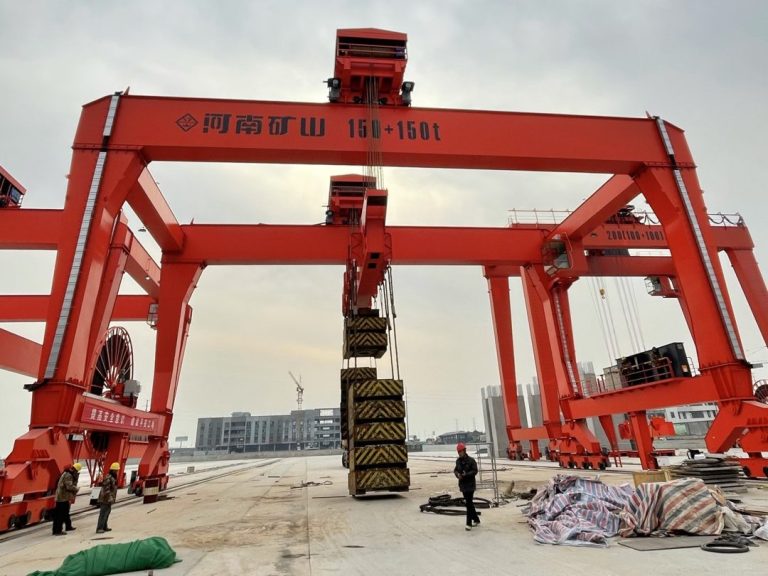
RTG vs RMG Crane: Which Container Yard System Should You Choose?
Choose an RTG when block-to-block mobility and layout flexibility create more value than a fixed travel path. Choose an RMG when the yard has a stable long-term layout and needs repeatable rail-guided movement, grid power, high-density stacking or a stronger automation path. The correct decision is made at yard-system level—not by comparing crane purchase prices alone.
Short Answer for Container Yard Buyers
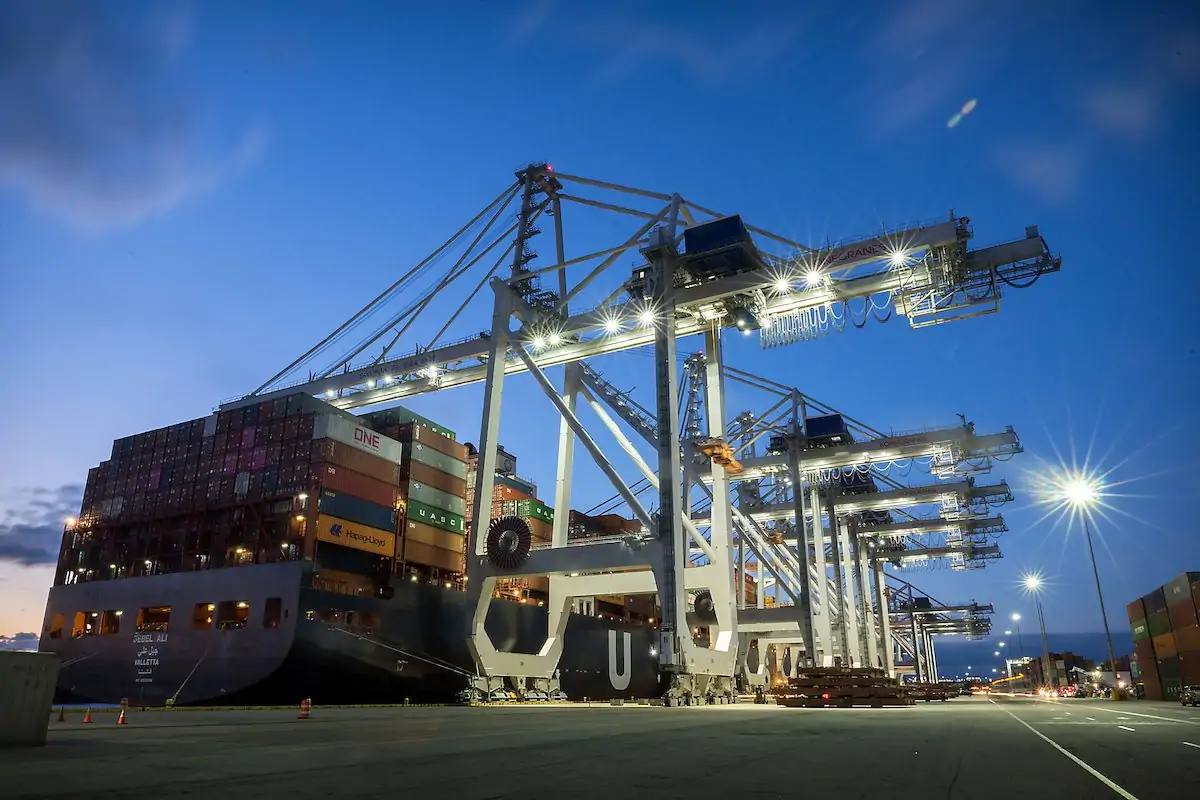
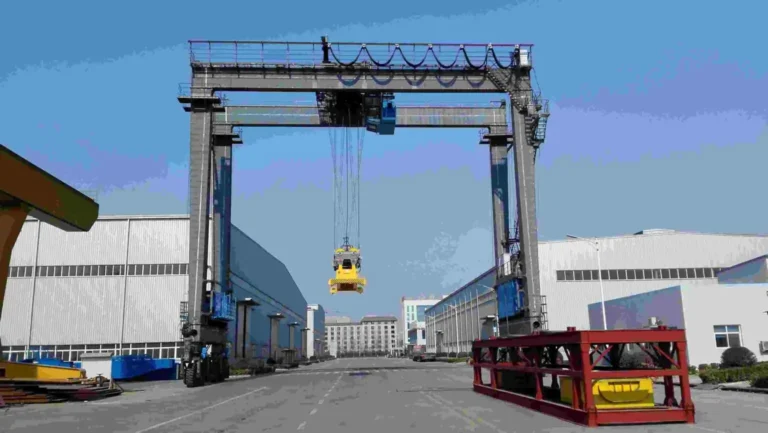
A rubber-tired gantry crane (RTG, also written rubber-tyred gantry crane) travels on tires and can usually move between compatible yard blocks. A rail-mounted gantry crane (RMG) follows a permanent rail path. That travel-system difference changes the civil works, power architecture, operating discipline, automation potential, maintenance tasks and future expansion strategy for the entire terminal.
RTG Is Usually the Better Starting Point When
- Traffic patterns or storage blocks may change.
- One crane must serve several compatible blocks.
- The project is a brownfield yard where rail installation is difficult.
- Initial civil work must be limited, but pavement capacity can be verified.
- The terminal accepts tire, steering and mobile power-system maintenance.
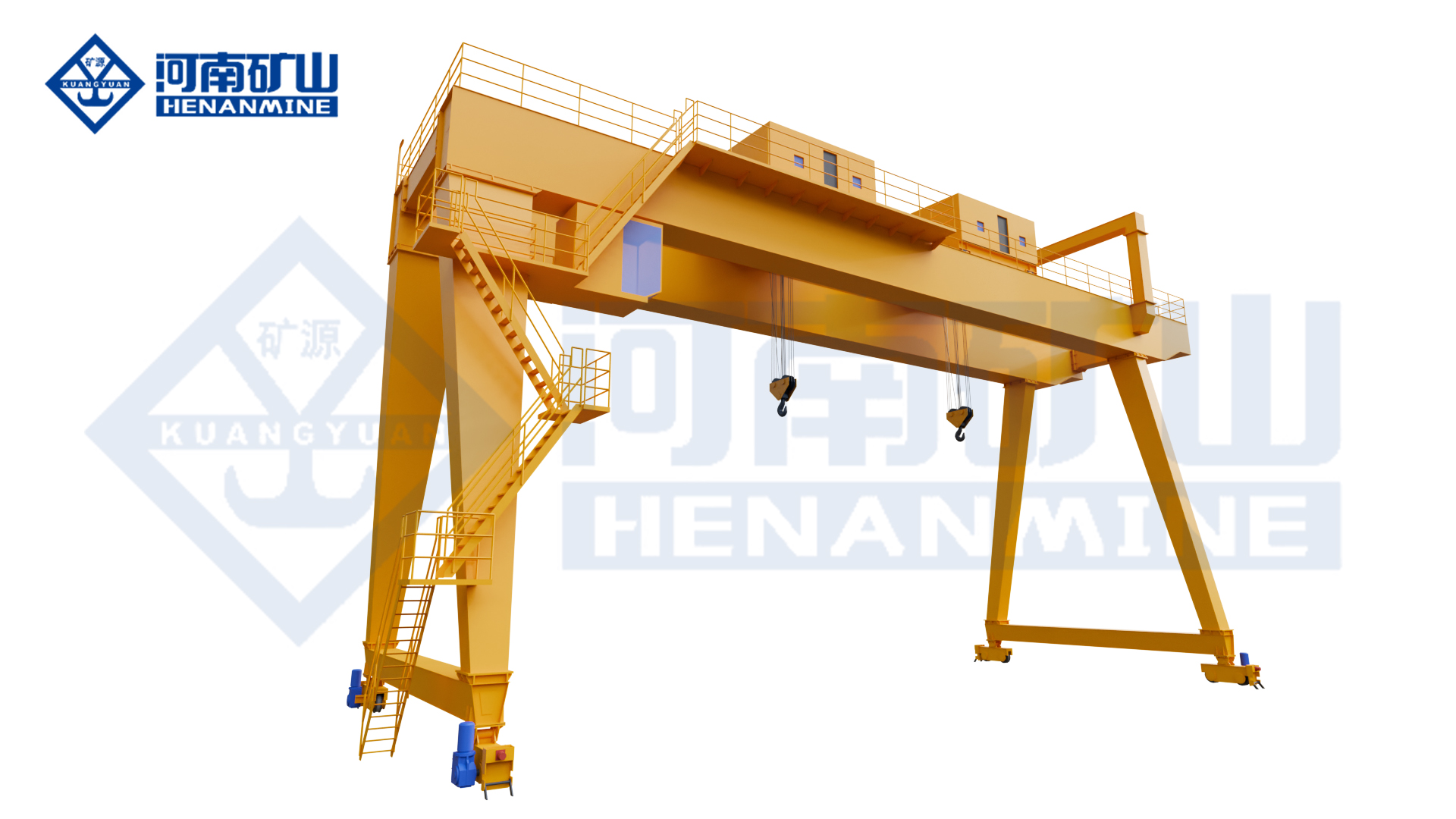
Review the Henan Mine Crane RTG product page when preparing the equipment concept.
RMG Is Usually the Better Starting Point When
- The yard layout and crane route are permanent.
- Container, rail or truck handover positions are repeatable.
- Grid electrification is part of the long-term terminal plan.
- High positioning repeatability and automation are important.
- Large spans, long blocks or coordinated multi-crane operation are required.
Review the Henan Mine Crane RMG product page for a fixed-rail container-yard configuration.


RTG vs RMG: Buyer-Focused Comparison
| Decision Factor | RTG Crane | RMG Crane | What the Buyer Must Verify |
|---|---|---|---|
| Travel path | Moves on rubber tires and may transfer between compatible blocks. | Runs on a permanent rail runway. | Block-change routes, turning areas, rail route, end approaches and traffic crossings. |
| Yard flexibility | Better suited to changing block assignments and phased layouts. | Best suited to stable, planned operating blocks. | Five-, ten- and twenty-year yard-development plan—not only opening-day traffic. |
| Civil works | No crane travel rail, but requires pavement designed for wheel loads, steering and repeated travel. | Requires rail foundations, alignment, drainage and settlement control. | Maximum wheel loads, load combinations, tolerances, soil data and civil-scope responsibility. |
| Power options | Diesel-generator, hybrid, battery or electrified RTG arrangements may be considered. | Commonly integrated with grid power through a project-specific conductor or cable system. | Peak demand, energy price, cable route, charging/fueling, regenerative energy and backup strategy. |
| Position repeatability | Depends on steering, guidance, tire condition, pavement and positioning systems. | Rail guidance provides a repeatable travel path; final accuracy still depends on the full control chain. | Measurable positioning accuracy and repeatability under loaded operating conditions. |
| Automation | Possible, but cross-block travel and mixed traffic can add control complexity. | Well suited to fixed-block automation and coordinated handover zones. | Automation boundary, sensors, communications, exclusion zones, fallback modes and system interfaces. |
| Maintenance focus | Tires, steering, wheel alignment, mobile power and pavement interaction. | Rails, wheels, rail alignment, cable/conductor systems and fixed infrastructure. | Service access, component life, local capability, spare parts and planned downtime. |
| Expansion | Equipment can be reassigned if routes and surfaces are compatible. | Expansion follows rail, civil and power-system extensions. | Future block locations, crane quantity, peak traffic and expansion shutdown requirements. |
1. Start With the Yard Layout, Not the Crane Catalogue
The first procurement drawing should show every container row, truck lane, railway track, transfer zone, reefer area, hazardous-goods separation area, inspection lane, maintenance bay, gate route and obstacle. The crane must fit the process flow and the traffic rules around it.
1Define the Working Span
State how many container rows the crane must cover, whether a truck or railway lane sits beneath the span, and whether one or both sides require cantilevers. Do not describe the requirement only as “six rows plus one lane.” Provide centerline dimensions, safety clearances, container overhangs and maintenance access.
2Define the Stacking Height
“One-over-five” and “one-over-six” describe operational stacking concepts, not the complete lifting height. The manufacturer also needs container height, spreader depth, clearance above the highest stack, vehicle or wagon profile, lifting approach and any maintenance or rescue requirement.
3Model RTG Block Transfers
Mobility has value only if the crane can change blocks safely and quickly. Check route width, turning radius, tire steering modes, pavement transitions, overhead services, lighting columns, road crossings, pedestrian controls and whether the crane may travel with a spreader or suspended load. Block-change time must be excluded from productive moves unless the contract states otherwise.
4Engineer RMG Rails as Part of the System
RMG procurement must identify rail gauge, rail type, runway length, foundation design basis, rail-elevation tolerance, permissible differential settlement, end stops, storm anchoring positions, drainage and survey responsibility. A rigid crane on misaligned rails can experience abnormal wheel loading and accelerated wear.
2. Capacity, Throughput and Duty Must Be Contractual
Rated Capacity: Clarify Where It Is Measured
State whether rated capacity is quoted under the spreader or at the hoisting interface. Provide all container types, maximum gross mass, out-of-gauge loads, eccentric load cases and the spreader self-weight. Also define single-lift, twin-lift or special-frame requirements. Two quotations with the same “40t” headline may not include the same spreader, load point or operating envelope.
Moves per Hour: Define the Test Cycle
Catalogue speeds cannot predict terminal throughput by themselves. A contractual cycle should state container weight, starting and ending positions, lift height, trolley distance, gantry travel if included, spreader engagement time, alignment method and the number of repeated cycles. Vehicle waiting, dispatch delays and unavailable stack positions should be identified separately.
Fleet Quantity: Include Availability
Estimate the peak net yard moves required during the design period, then divide by a realistic net output per available crane. Add maintenance coverage and operational resilience. One mobile RTG may serve several low-utilization blocks, while a high-throughput fixed yard may justify multiple RMG units with coordinated anti-collision zones and task dispatch.
Working Duty: Use the Actual Load Spectrum
Provide annual operating days, hours per shift, peak and average cycles, starts per hour, typical container weights and expected design life. Duty selection affects structural fatigue, motors, brakes, gearboxes, wire ropes, wheels, tires and maintenance intervals. Rated capacity alone cannot establish the required duty class.
Buyers still defining the basic crane geometry can also use the gantry crane selection guide before issuing the container-yard RFQ.
3. Compare Power, Automation and Environmental Design
RTG Power Architecture
A conventional RTG may use an onboard generator, while hybrid, battery-assisted and electric RTG concepts can reduce fuel use and local emissions. Electrification can add cable reels, conductor infrastructure, connection procedures or charging requirements that affect mobility. Ask the supplier to define which motions and auxiliary loads are included in the energy estimate.
RMG Power Architecture
An RMG commonly uses grid power, but the project must still define incoming voltage, frequency, maximum demand, cable or conductor arrangement, power-quality limits, emergency power, grounding and the ability of the electrical system to accept regenerated energy. Installed motor power is not the same as annual energy consumption.
Automation Is a Scope, Not a Checkbox
Separate manual cab operation, remote manual control, assisted positioning, semi-automatic cycles and fully automatic job execution. Then define who provides container identification, stack coordinates, truck or wagon position, task dispatch, camera systems, network infrastructure and terminal operating system interfaces.
- Positioning: state accuracy, repeatability, update rate and acceptance conditions.
- Anti-sway: define operating modes and representative loaded tests.
- Vehicle handover: define traffic lights, alignment, driver instructions and anti-lift logic.
- Recovery: define safe behavior after loss of communication, power, positioning or automatic functions.
- Data ownership: define command authority, alarm history, event records and cybersecurity responsibility.
Outdoor and Coastal Conditions
Specify operating wind, out-of-service design wind, storm parking and anchoring, temperature range, rain, snow, ice, lightning, salt contamination, humidity, dust and seismic requirements. Corrosion system, enclosure ratings, component heating or cooling and maintenance frequency must be matched to the actual site. Review Henan Mine Crane’s port crane range and port and container-terminal applications when defining the operating environment.
4. Safety, Maintenance and Total Cost of Ownership
Safety Functions Buyers Should Specify
RTG Maintenance Focus
Include tires, inflation or tire condition, steering cylinders and linkages, wheel alignment, drive assemblies, brakes, guidance sensors, onboard power equipment and cable or charging equipment where fitted. Tire heat, uneven wear and pavement defects can affect stability, energy use and positioning.
RMG Maintenance Focus
Include rail alignment, wheels and flanges, buffers, rail clamps or anchoring, cable reels or conductor systems, travel drives and foundation survey. Both crane types also require planned inspection of structures, ropes, drums, sheaves, brakes, spreaders, PLC/VFD equipment, sensors, cameras and safety devices.
Build a System-Level TCO Model
Compare at least the crane package, civil work, power infrastructure, yard modification, commissioning, automation integration, energy, labor, tires or rails, scheduled maintenance, major component replacement, spare parts, planned downtime and expected residual or relocation value. Use the same traffic forecast, availability target, energy price and evaluation period for both options.
RTG or RMG? Match the System to the Operating Scenario
| Operating Scenario | Recommended Starting Point | Reason to Validate |
|---|---|---|
| Brownfield terminal with changing storage blocks | RTG | Check existing pavement, block-transfer routes, traffic crossings and future electrification. |
| Permanent high-volume rail intermodal block | RMG | Check rail geometry, train interface, target moves per hour and multi-crane coordination. |
| Greenfield automated container yard | RMG or automated RTG study | Compare fixed-zone automation against the flexibility required by the long-term master plan. |
| Multipurpose terminal with seasonal peaks | RTG | Confirm whether mobility offsets block-change time and mobile power cost. |
| Large stable block with grid-power target | RMG | Compare civil investment with expected energy, labor and availability benefits. |
| Phased terminal expansion with uncertain final layout | RTG initially or hybrid fleet | Model whether later rail conversion, crane reassignment or mixed operation creates the lowest lifecycle cost. |
A Practical Decision Sequence
- Freeze container sizes, load cases and spreader concept.
- Map opening-day and future yard blocks, lanes and traffic routes.
- Calculate peak net moves and fleet availability.
- Compare pavement work against rail foundations and power distribution.
- Define operating, remote and automatic modes.
- Price energy, maintenance, labor, downtime and expansion over the evaluation period.
- Run a contractually defined cycle and availability comparison before award.
Information Required for an RTG or RMG Quotation
Send the same technical schedule to every manufacturer. A comparable RFQ should contain:
Project Reference: Two 40.5t RMG Cranes for a Port Logistics Hub
A Henan Mine Crane project for Taicang Port used two 40.5t rail-mounted container gantry cranes for intermodal transfer among railway wagons, truck lanes and storage blocks. The published project configuration includes variable-frequency motion control, Siemens PLC, RCMS remote monitoring and operation, anti-sway, truck anti-lift protection, automatic container search, spreader zero-position monitoring and automatic guidance.

The project illustrates why an RMG quotation should be evaluated as a complete operating package. Adding a second crane does not automatically double output: both units need productive work fronts, coordinated control zones and enough train, truck and stack availability. Read the two-crane Taicang Port RMG case and the related RMG port logistics solution.
For cold-region or very high-duty applications, review the A8 automated RMG project for a −40°C railway container yard. Temperature capability, duty class and automation must be specified independently; they are not inherent in the letters “RMG.”
Frequently Asked Questions
Is an RMG always more productive than an RTG?
No. RMGs can support repeatable fixed-block operation, but actual productivity depends on speeds, cycle geometry, automation, vehicle availability, stack strategy, crane availability and dispatch. An RTG fleet can outperform a poorly planned RMG system in a yard that needs frequent reassignment.
Does an RTG require no civil engineering?
No. It does not require a crane travel rail, but the pavement must resist maximum wheel loads, repeated travel, braking and steering. Flatness, drainage, underground utilities, slab joints and route clearances must be checked.
Which crane is easier to electrify?
An RMG's fixed path generally simplifies permanent grid connection. RTGs can also be electrified through project-specific cable, conductor, battery or hybrid concepts, but the solution must preserve the required block mobility and operating procedure.
Which crane is better for automation?
RMGs are often a strong fit because rails and fixed handover zones create repeatable geometry. Automated RTGs are also possible, but steering, cross-block movement and interaction with mixed traffic can require additional sensing and control.
Can RTG and RMG cranes operate in the same terminal?
Yes. A terminal may use RMGs in stable high-throughput rail or storage blocks and RTGs in flexible or changing areas. The traffic plan, handover process, maintenance strategy and control-system interfaces must be coordinated.
How should rated capacity be written in the RFQ?
List all container sizes and maximum gross masses, then state whether the crane rating is required under the spreader or at the hoisting interface. Include spreader self-weight, eccentric loading and single- or twin-lift requirements.
How do buyers compare crane energy consumption?
Provide the same representative container weights, movements, travel distances, operating hours and auxiliary loads to every supplier. Compare annual modeled energy, fuel or charging demand—not installed motor power alone.
What is the most important document before requesting a quote?
A dimensioned yard layout with container rows, stack height, truck and rail lanes, block length, obstacles, transfer zones and future expansion. Add the traffic forecast, container data and required operating modes.
Final Recommendation
Select an RTG when the economic value of block mobility, phased development and operational reassignment outweighs the cost of mobile travel, pavement demands, block-change time and tire/power-system maintenance. Select an RMG when the yard has a stable fixed route and can justify rail, foundation and grid-power investment through repeatable high-utilization operation, positioning, automation and long-term lifecycle value.
If the traffic forecast or final layout is uncertain, do not force a single answer. Compare an RTG fleet, an RMG block and a mixed-yard concept using the same throughput, availability, energy, labor and expansion assumptions. Henan Mine Crane can review the yard drawing and prepare a project-specific container crane proposal.
Request an RTG or RMG System Recommendation
Send your yard layout, container types, maximum gross mass, stacking plan, truck or railway lanes, target moves per hour, operating schedule, power supply, automation scope, climate data and destination. The technical team can compare suitable travel, structure, spreader, power and control configurations.